
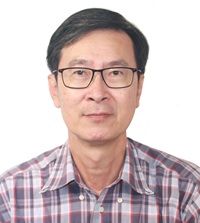
Prof. Chen-Chien James Hsu, National Taiwan Normal University, Taiwan
The temporary title: Vision-Based Learning from Demonstration (LfD) and Collaborative Robotic Systems
Chen-Chien Hsu was born in Hsinchu, Taiwan. He received the B.S. degree in electronic engineering from the National Taiwan University of Science and Technology, Taipei, Taiwan, in 1987, the M.S. degree in control engineering from National Chiao-Tung University, Hsinchu, in 1989, and the Ph.D. degree from the School of Microelectronic Engineering, Griffith University, Brisbane, QLD, Australia, in 1997. He was a Systems Engineer with IBM Corporation, Taipei, for three years, where he was responsible for information systems planning and application development, before commencing his Ph.D. studies. He joined the Department of Electronic Engineering, St. John’s University, Taipei, as an Assistant Professor, in 1997, and was appointed as an Associate Professor in 2004. From 2006 to 2009, he was with the Department of Electrical Engineering, Tamkang University, Taipei. Dr. Hsu is currently a Distinguished Professor with the Department of Electrical Engineering, National Taiwan Normal University, Taipei. He is the author or coauthor of more than 250 refereed journal and conference papers. His current research interests include Learning from Demonstration (LfD) Robotic Systems, Collaborative Robots, Human Action Recognition, Mobile Robot Navigation, Smart Surveillance Systems. He is an IET fellow.

Prof. Chengjiu Yin, Kyushu University, Japan
The temporary title: Educational Big Data and Learning Success
Dr. Chengjiu Yin is currently a Vice Director of the Research Institute for Information Technology at Kyushu University, Japan. He received the Early Career Research Award from APSCE in 2019. Prof. Yin serves as an Associate Editor of Interactive Learning Environments (SSCI). He has also served as a Guest Editor for the Journal of Distance Education Technologies (EI) on three occasions and for Interactive Learning Environments (SSCI) on four occasions. He has been invited to deliver over 20 speeches at various academic conferences and events. He is a member of the Editorial Board for the Journal of Educational Technology & Society (ET&S) and for Computers and Education: Artificial Intelligence. Prof. Yin emphasizes the continuous adoption and development of new teaching methods, materials, and technologies grounded in scientific insights. His research focuses on Educational Data Mining, Learning Analytics, and AI in Education. Currently, his primary goal is to explore how AI can be used to design learning environments that enhance knowledge sharing, awareness, and creation. He has proposed the concept of "Learning Success" for the era of AI in education and leads research on the transformation of educational goals.
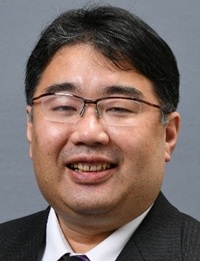
Prof. Shinobu Hasegawa, Japan Advanced Institute of Science and Technology (JAIST), Ishikawa, Japan
Shinobu Hasegawa is currently a director and professor at the Center for Information Infrastructure, Japan Advanced Institute of Science and Technology (JAIST). He received his B.S., M.S., and Ph.D. degrees in systems science from Osaka University in 1998, 2000, and 2002, respectively. The primary goal of his research is to facilitate “Human Learning and Computer-mediated Interaction” in a distributed environment. His research field is mainly learning informatics which includes support for Learning 5.0, affective learning, Web-based learning, game-based learning, language learning, cognitive skill learning, distance learning system, smart learning, and community-based learning.